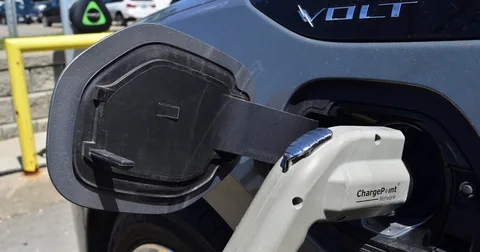
When you buy an EV (electric vehicle) in Osaka Prefecture, where does the subsidy come from? The bottom line for fiscal 2026 (Reiwa 8): Osaka has no prefectural purchase subsidy for individuals — it is the national CEV subsidy (up to ¥1.3 million for EVs) plus top-ups from a few municipalities. What is more, among municipal programs Toyonaka City's ¥100,000 subsidy ran out of budget about a month and a half after applications opened, and Sakai City has abolished its EV subsidy — making Osaka one of the most extreme first-come, first-served areas in Japan. This article sorts out how to combine the national and municipal programs, and how to move so you do not miss out, based on fiscal 2026 information.
Think of Osaka's EV subsidies as a two-story structure
CEV subsidy (the main player)
A national subsidy available to both individuals and corporations. The FY2025 supplementary-budget round (registrations from April 2026) offers the largest amounts, such as up to 1.3 million yen for EVs.
Only a few, such as Toyonaka — fierce competition
Toyonaka City's ¥100,000 for individuals ran out of budget in mid-June 2026. Osaka City has no subsidy, and Sakai City has already abolished its EV subsidy.
No prefectural subsidy for individuals
Osaka Prefecture's subsidies are limited to a ZEV adoption promotion subsidy for small and medium-sized businesses. Individuals are not eligible, so build your plan from national plus municipal programs.
[National] CEV Subsidy under the FY2025 Supplementary Budget (registrations from April 2026; the main pillar)
"Up to ¥1.3 million" is a cap. The subsidy amount is set per model based on evaluations such as the vehicle's environmental performance. Applications close once the budget runs out. On September 4 the secretariat announced that it expects to stop accepting applications around early to late December 2026 (applications are taken in order of arrival, and intake ends the day before the budget is reached; secretariat notice, PDF, in Japanese). A subsidized vehicle carries a retention obligation of four years in principle — if you dispose of it within that period, you may have to repay the subsidy. Check the exact amount for the car you plan to buy in the figures published by the Next Generation Vehicle Promotion Center.
For the full picture of the CEV subsidy and the situation nationwide, see our guide to EV subsidies in all 47 prefectures.
[Osaka Prefecture] No prefectural subsidy for individuals (businesses only)
Osaka Prefecture's EV-related subsidies for fiscal Reiwa 8 are for businesses only, such as a ZEV adoption promotion subsidy for small and medium-sized businesses based on a countermeasure plan — there is nothing for individual purchases. Individuals do not need to wait for a prefectural subsidy; the right answer for fiscal 2026 is to combine the national CEV subsidy with municipal programs.
Neighboring Kyoto and Hyogo prefectures also have no prefecture-level subsidies for individuals, so the Kansai region is broadly a "national plus municipal" pattern. Comparing with the Tokyo area in our Tokyo EV subsidy guide shows the gap clearly.
[Municipalities] Toyonaka's ¥100,000 is out of budget, Osaka City has none, Sakai abolished its program
| City | Status in fiscal 2026 |
|---|---|
| Toyonaka | ¥100,000 for individuals (EV, PHEV, FCV; new vehicles only; leases not eligible). Applications were scheduled to run until March 2027, but closed in mid-June 2026 when the budget was reached |
| Osaka City | No EV purchase subsidy for individuals |
| Sakai | EV subsidy abolished (only FCV and charging equipment for apartment buildings continue) |
The reality of municipal subsidies in Osaka is that even where they exist, they disappear within months. If you are aiming for next fiscal year, the only winning strategy is to lock in your model and quote before the end of the fiscal year so you can apply immediately when applications open in April or May. Always check the latest status for your municipality by searching for its name plus "EV 補助金" (EV subsidy).
Also check the taxes on EVs (automobile tax relief)
Separately from subsidies, the environmental performance levy of the automobile tax was abolished on March 31, 2026, and it is not charged on vehicles acquired on or after April 1, 2026 (Tokyo Metropolitan Government Bureau of Taxation, in Japanese). For EVs, the following year's automobile tax (ownership portion) is reduced by roughly 75% under the green tax special measure. For details, see our article on EV taxes and the 2026 automobile tax reform.
Are subsidies taxable?
EV subsidies received by an individual are treated as occasional income. Because there is a special deduction of ¥500,000 per year, no tax arises as long as your total occasional income for the year, including other items, stays at or below ¥500,000. Combining national and municipal subsidies usually stays within this, but be careful about the total in a year when you receive several large subsidies. Business use is treated differently — consult a tax accountant or similar professional.
FAQ
Q. Can I use subsidies from outside the prefecture?
A. No. Municipal subsidies are determined by your address and the vehicle's base of use, so Osaka residents cannot receive subsidies from Tokyo or other areas.
Summary
- For FY2026, Osaka Prefecture has no subsidy for individuals; prefectural subsidies are limited to small and medium-sized businesses.
- The national CEV subsidy is the main source for vehicles, up to ¥1.3 million for EVs, expected to close sometime from early to late December 2026 (Reiwa 8).
- Toyonaka City's ¥100,000 subsidy for individuals closed in mid-June 2026 after reaching its budget cap. Osaka City has no subsidy, and Sakai City has abolished its EV subsidy.
- To aim for next fiscal year's municipal subsidy, finalize the vehicle model and quote before fiscal year-end so you can apply right when applications open in April or May.
- The environmental performance levy was abolished as of March 31, 2026 (Reiwa 8). The vehicle type levy is reduced by roughly 75% under the green taxation special measure.
Reference links (sources)
* Subsidy amounts, requirements, and application status are as of August 2026. Programs may end early depending on budget consumption. Always check each official site for the latest information before applying.