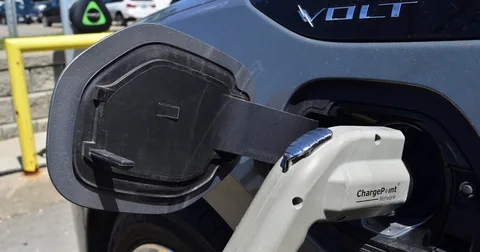
In Kumamoto Prefecture, the flagship EV (electric vehicle) subsidy is Kumamoto City's 100,000 yen. The prefecture has no subsidy for individuals (it instead publishes a list of municipal programs and points residents to them), and Kumamoto City's subsidy has a disaster-preparedness design: the vehicle must have power-feeding capability. In addition, from FY2026 it switched to a two-period system (first and second halves) — the first period covers 60 units and runs until October 31. Also note that the city has announced that, due to the July 2026 Kumamoto earthquake, screening and payment may take longer than usual. Here is the latest way to put the pieces together.
Think of Kumamoto's EV Subsidies as a "Two-Story Building"
CEV subsidy (the main player)
A national subsidy available to both individuals and corporations. The FY2025 supplementary-budget round (registrations from April 2026) offers the largest amounts, such as up to 1.3 million yen for EVs.
Kumamoto City: 100,000 yen, power-feeding capability required, two-period system
Kumamoto City pays 100,000 yen for EVs, PHEVs, and FCVs. Power-feeding capability is mandatory; the first period covers 60 units (June 15 to October 31), with second-period details out around September.
The prefecture only publishes a program list — no direct subsidy
No prefectural purchase subsidy for individuals. The prefecture publishes a list of municipal support programs and directs residents to them.
[National] CEV Subsidy under the FY2025 Supplementary Budget (registrations from April 2026; the main pillar)
"Up to 1.3 million yen" is a cap. The actual amount is set per model based on the vehicle's environmental performance and other criteria. Applications close once the budget runs out. On September 4 the secretariat announced that it expects to stop accepting applications around early to late December 2026 (applications are taken in order of arrival, and intake ends the day before the budget is reached; secretariat notice, PDF, in Japanese). Subsidized vehicles carry a mandatory holding period of 4 years in principle — disposing of the car earlier may require repayment. Check the exact subsidy amount for your model in the figures published by the Next Generation Vehicle Promotion Center.
For the full picture of the CEV subsidy and the situation nationwide, see our guide to EV subsidies in all 47 prefectures.
[Kumamoto Prefecture] No Prefectural Subsidy for Individuals — a "Program List" Approach
Kumamoto Prefecture has no EV purchase subsidy for individuals. Instead, the prefecture publishes an annual "list of municipal support programs for renewable energy and related items" and directs residents to municipal programs. For individuals, the basic pattern is to combine the national CEV subsidy with a municipal subsidy.
[Municipalities] Kumamoto City Pays 100,000 Yen — Only for "EVs That Can Feed Power," and Watch the Earthquake's Impact
| Item | Kumamoto City's program (FY2026) |
|---|---|
| Amount | 100,000 yen per vehicle for EVs, PHEVs, and FCVs |
| Mandatory requirement | A vehicle eligible for the national CEV subsidy that has power-feeding capability (external power supply). Can be combined with the national subsidy |
| Application periods | From FY2026 (Reiwa 8), changed from year-round to a two-period system (first and second halves). First period: 60 units, June 15 to October 31, 2026 (second-period details to be published around September) |
| Caution | The city has announced that because disaster-response work for the July 28, 2026 Kumamoto earthquake takes priority, screening and payment may take longer than usual |
The power-feeding requirement is a distinctly Kumamoto-style design that treats EVs as emergency power sources in disasters. Since administrative work may be delayed by the earthquake, build the potential delay in receiving the grant into your delivery and payment schedule when planning your finances. Itsuki Village, Yamato Town, and others also have subsidy information (confirm the FY2026 details with each municipality).
Check the "Taxes" on EVs Too (Automobile Tax Reductions)
Separately from subsidies, the environmental performance levy of the automobile tax was abolished on March 31, 2026, and it is not charged on vehicles acquired on or after April 1, 2026 (Tokyo Metropolitan Government Bureau of Taxation, in Japanese). For EVs, the following year's automobile tax (type-based levy) is reduced by roughly 75% under the green tax special measure. For details, see EV taxes and the 2026 automobile tax reform.
Are Subsidies Taxable?
EV subsidies received by individuals are treated as occasional income (ichiji shotoku). Because a special deduction of 500,000 yen per year applies, no tax arises as long as your total occasional income for the year — including other items — stays at or below 500,000 yen. National and local subsidies combined usually fit within this, but be careful about the total in a year when you receive several large subsidies. Business use is treated differently, so consult a tax accountant or other professional.
FAQ
Q. What is the "power-feeding capability" in Kumamoto City's subsidy?
A. It means the ability to draw electricity out of the car for external use (V2L or V2H compatibility, for example). The design favors EVs that can serve as emergency power sources in disasters, so trim levels without power-feeding capability are not eligible. Check your trim's power-feeding compatibility before purchase.
Q. Is there a special provision for replacing a car damaged in the Kumamoto earthquake?
A. As of August 2026, no disaster-victim special provision for the subsidy has been confirmed. Replacing a car damaged in the quake may qualify for earthquake-related support programs (such as the natural disaster victims' livelihood recovery support grant) and the casualty loss deduction, so check those as well.
Summary
- Kumamoto Prefecture has no prefectural subsidy for individuals. Combine the national CEV subsidy (up to ¥1.3 million for EVs) with municipal subsidies.
- Kumamoto City offers ¥100,000 for EV, PHEV, and FCV purchases. The vehicle must have power-supply capability, and fiscal 2026 runs in two rounds -- a first round of 60 slots (June 15 to October 31) and a second round announced around September.
- Due to disaster response for the July 28, 2026 Kumamoto earthquake, review and payment may take longer than usual.
- The national CEV subsidy is expected to close for applications sometime between early and late December 2026. The ownership requirement is 4 years in principle.
- The subsidy counts as occasional income. It is not taxed if it falls within the annual ¥500,000 special deduction.
Reference Links (Sources)
* Subsidy amounts, requirements, and application status are as of August 2026. Programs may end early depending on budget consumption. Always check the latest information on each official website before applying.